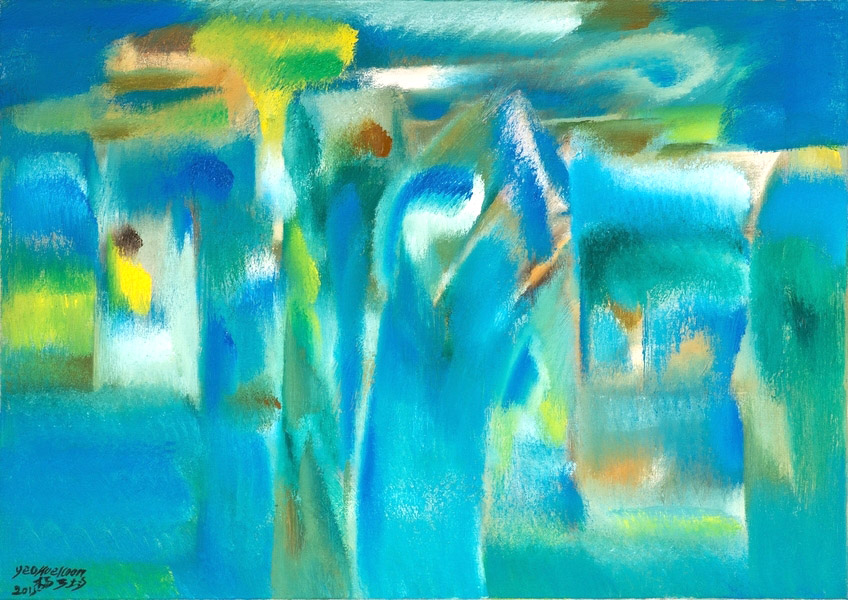
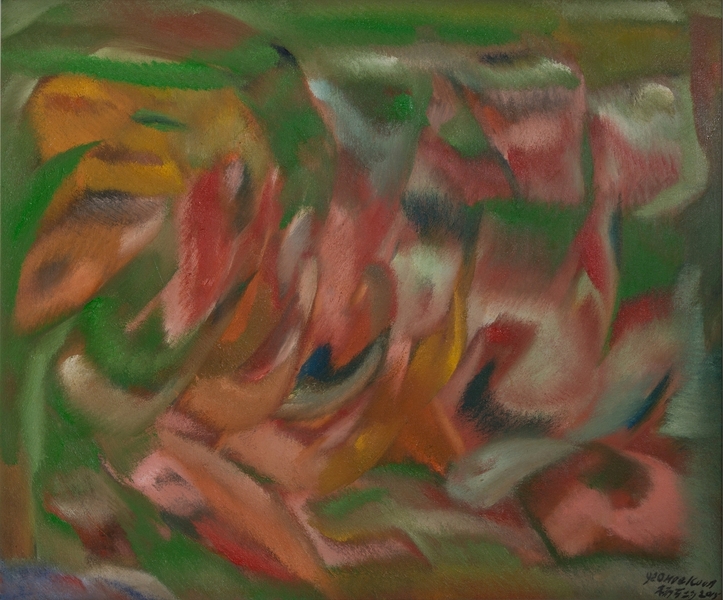
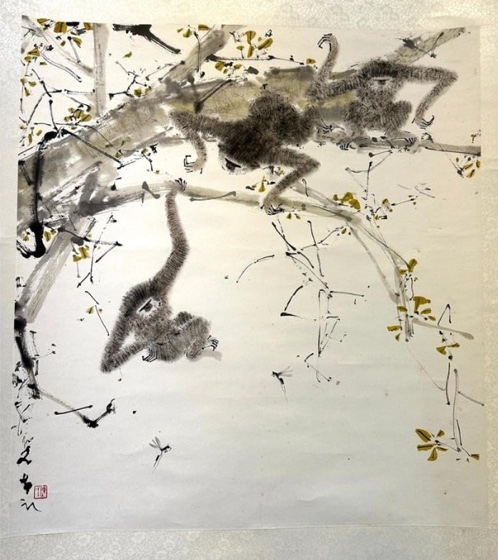
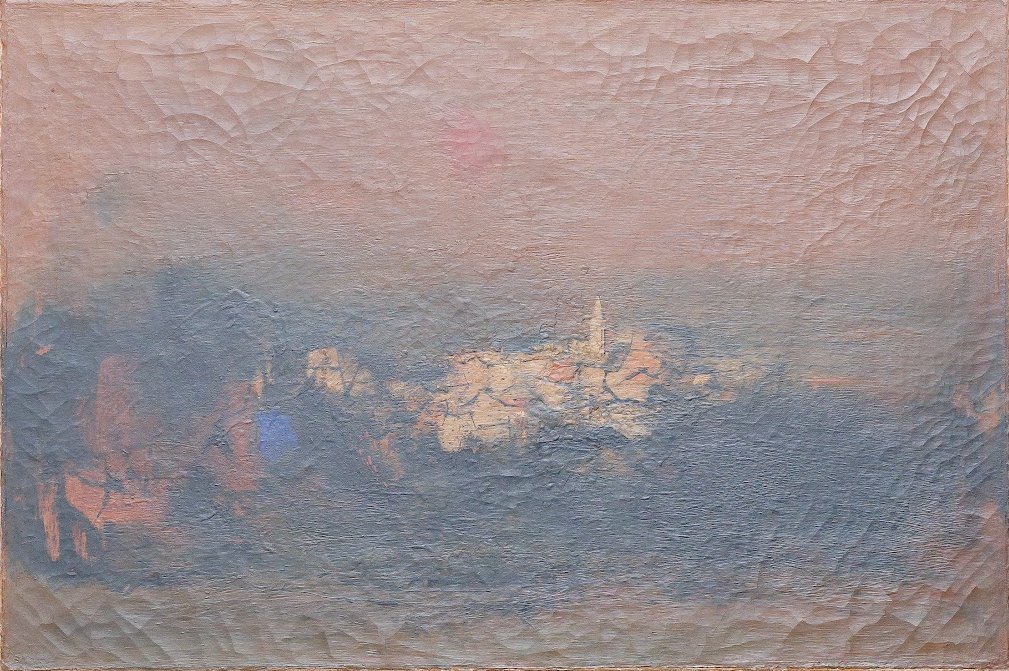
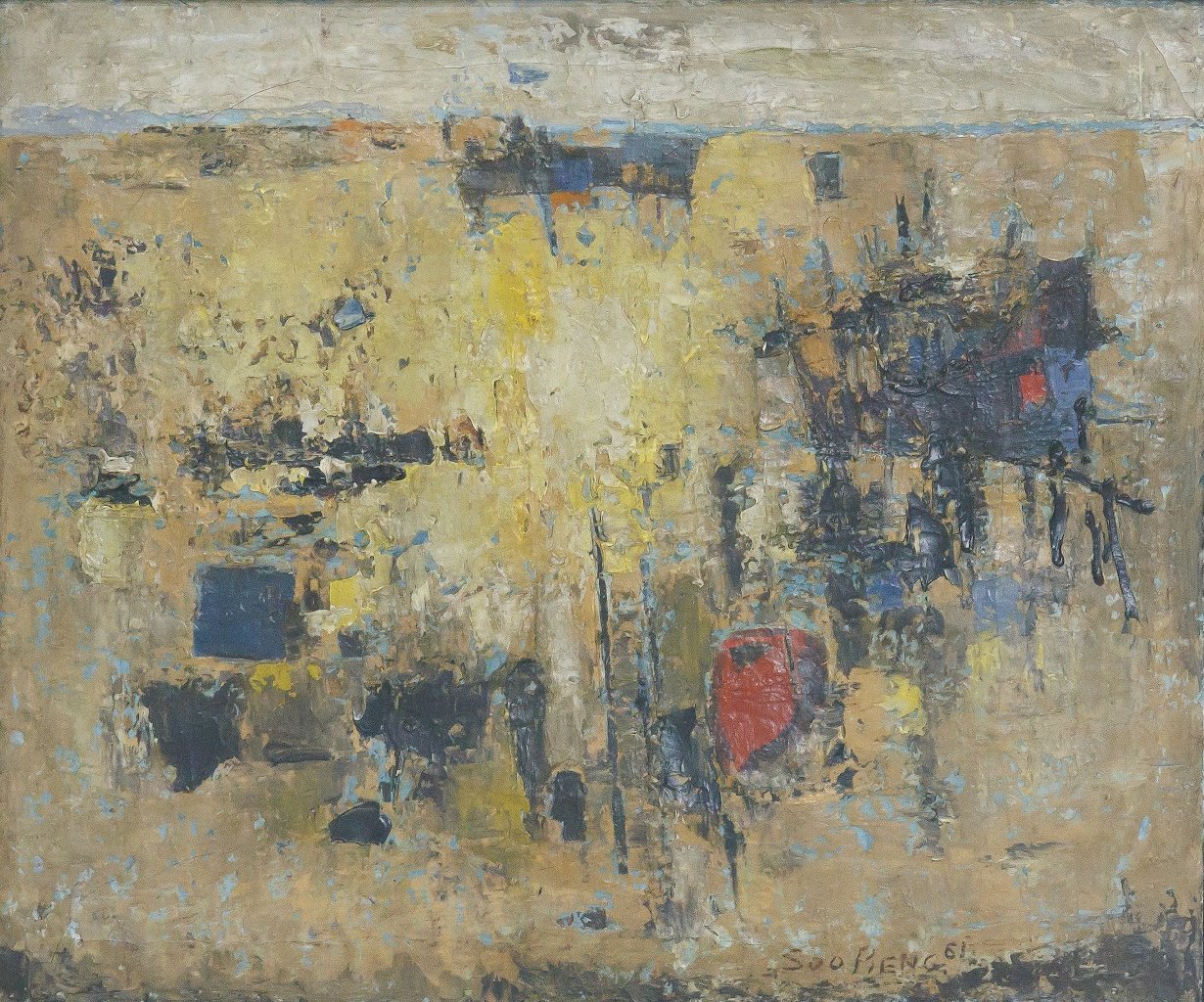
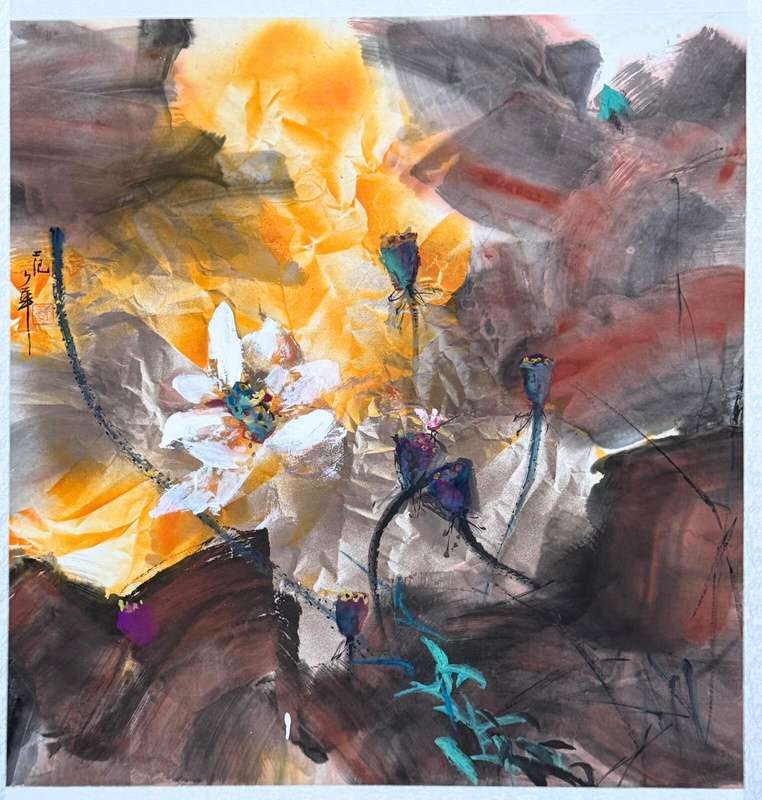
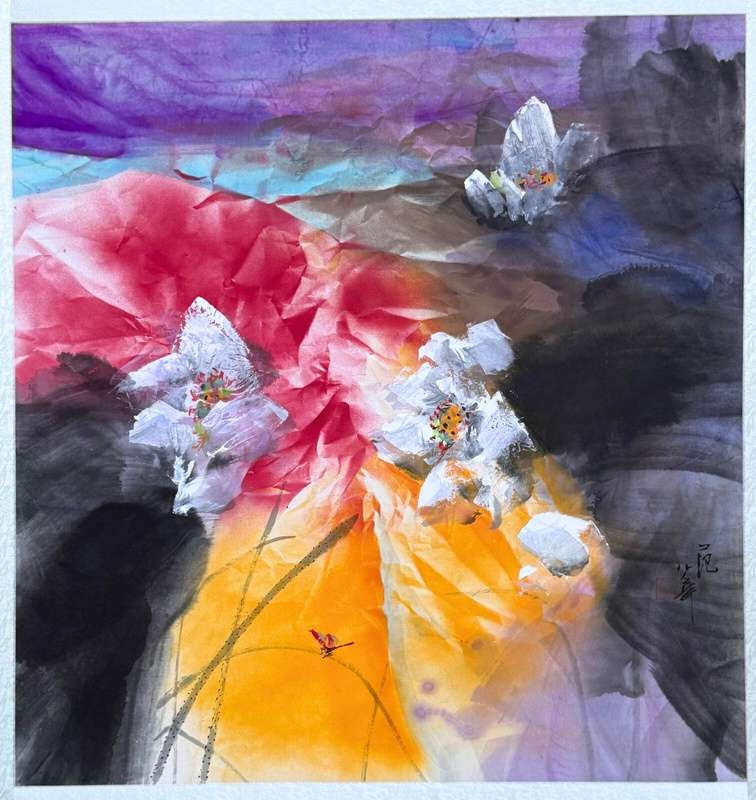
Even when these Singapore art- ists were painting traditional subjects like the Four Gentlemen – referring to the plum blossom, or chid, bamboo and chrysanthemum they reinterpreted and reimagined them, adds Ms Liu.
“Fan came from a Chinese literati tradition and persevered in the classical style, and his works are not out of place when compared with Chinese painters of his era.
“In Ling and Phua’s generation of Singaporean and Malaysian painters, they were more clearly in- spired by the environment of South-east Asia – the hot and tropical climate, the multiracial people and diversity.”
The selected paintings were mostly created in the 1970s and 1980s, though they also include later works by Liu, when he revisited Chinese ink painting and calligra- phy in the last decade of his life.
Ms Liu, who is not related to the artist, says his return to the medium signalled how important ink had always been for first-generation artists, who were likely first exposed to it in school, even before Western art.
Coincidentally, the ongoing Cheong retrospective at Artspace@Helutrans also has a section showing his take on the Song Dynasty Chinese ink painting tradition yet another first-generation artist who returned to ink in his later life.
Artworks at Masterpieces Of Ink And Calligraphy are priced from $3,200 to $22,800.
Inspired by recent multi-sensory exhibitions such as Van Gogh: The Immersive Experience at Resorts World Sentosa, Ms Liu has also planned a tea appreciation session to spruce up the perhaps more dowdy image of a Chinese ink exhibition.
During a paid programme on Oct 8, a tea sommelier will be present and an artist station will be set up so participants can immerse them- selves in the feel of carrying ink across paper with a brush.
Asked why she likes Chinese ink, Ms Liu says it is a pleasant medium that has a wealth of great artists awaiting discovery.
Though these paintings may be harder to keep than oil paintings, given Singapore’s humidity, she promises it will be worthwhile.